![go-fitnness-logo-[Converted]](https://gofit.demo1.giniemedia.ae/wp-content/uploads/2026/08/go-fitnness-logo-Converted.png)
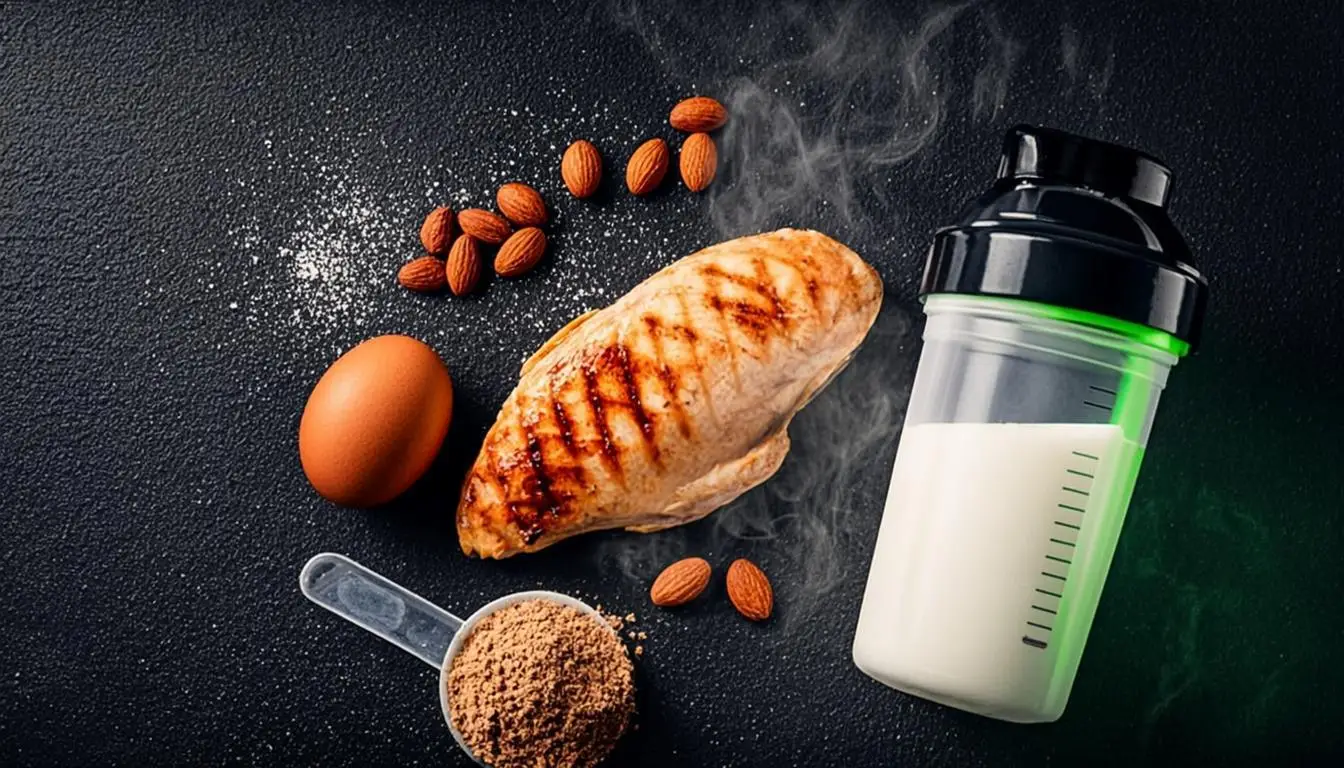
Walk into any gym locker room and you’ll hear the same conversation. Someone is shaking a protein shaker, explaining that they eat 300 grams of protein a day, that they “need” 1.5 grams per pound of bodyweight, and that anything less means losing muscle overnight.
They’re wrong. And they’re spending a fortune to be wrong.
The protein conversation has been hijacked by supplement companies, fitness influencers, and gym folklore. Let’s clear the air with what the research actually shows.
Myth #1: You Need 1 Gram Per Pound Of Bodyweight
This is the most persistent myth in fitness. The number floats around locker rooms like gospel, and it’s roughly double what the science supports.
The current evidence — including a 2018 meta-analysis by Morton et al. that pooled data from 49 studies — points to a clear ceiling: about 0.7 to 0.8 grams of protein per pound of bodyweight per day (1.6 to 1.7 g/kg) for maximizing muscle growth in resistance-trained individuals.
Eating more than this does not build more muscle. Your body has a finite capacity to use protein for muscle protein synthesis. Once you hit the ceiling, additional protein is either burned for energy or stored — and it’s expensive energy.
For a 180-pound lifter, that means ~130–145 grams per day. Not 300. Not 250. Just 130–145.
Myth #2: You Must Eat Protein Every 3 Hours
The “anabolic window” was a great marketing tool for protein bars and ready-to-drink shakes. It was never great science.
While it’s true that muscle protein synthesis spikes after a protein-rich meal and stays elevated for 3–5 hours, the total amount of protein you eat in a day matters far more than the timing. A 2020 review by Schoenfeld and Aragon concluded that total daily protein intake is the primary driver of muscle growth, with meal frequency playing a minor role at best.
If you prefer six small meals, do that. If you prefer three larger meals with 40–50 grams of protein each, do that. If intermittent fasting fits your life, you can build muscle on two meals — provided you hit your daily total.
The rule is simple: hit your daily target. Everything else is preference.
Myth #3: Plant Protein Is Useless
This myth refuses to die. The argument: plant proteins are “incomplete” because they lack one or more essential amino acids, so they can’t build muscle as effectively as animal protein.
The reality is more nuanced. Yes, individual plant proteins are typically lower in certain amino acids (especially leucine, the trigger for muscle protein synthesis). But you don’t eat individual plant proteins in isolation — you eat meals. A bowl of rice and beans, a tofu stir-fry with quinoa, or oatmeal with peanut butter and a banana all provide complete amino acid profiles when combined.
A 2021 study published in Medicine & Science in Sports & Exercise found no difference in muscle growth between athletes consuming protein exclusively from plants versus animals, as long as total protein and leucine intake were matched.
The takeaway: plant-based lifters can build just as much muscle. They just need to be slightly more intentional about leucine intake — typically 2.5–3 grams per meal — which usually means eating a bit more total protein (around 10–15% more) or including leucine-rich sources like soy, lentils, and pumpkin seeds.
Myth #4: Protein Powders Are Required
Supplement companies love this one. The truth: protein powder is food. It’s dehydrated, powdered food. There is nothing magical about it. It’s convenient, affordable per gram of protein, and easy to mix into a shaker bottle — but it is not necessary.
If you can hit your daily protein target from whole foods — chicken, fish, eggs, dairy, tofu, lentils, beans, Greek yogurt — you do not need protein powder. Save the money.
That said, protein powder is genuinely useful for:
- Travel days when whole-food protein is hard to find
- Post-workout convenience
- People with low appetites who struggle to eat enough protein from food
- Adding protein to oats, smoothies, or baked goods
Use it when it serves you. Ignore anyone who tells you it’s mandatory.
Myth #5: High Protein Damages Your Kidneys
This is the myth that won’t go away despite being debunked repeatedly. The confusion stems from a real clinical recommendation: people with existing kidney disease should limit protein intake. But that recommendation does not extend to healthy populations.
A 2018 review by Antonio et al. tracked resistance-trained individuals consuming up to 3.3 grams of protein per kilogram per day (roughly 1.5 g/lb) for a full year. No negative impact on kidney function, liver function, or blood lipids was observed.
In healthy people, the kidneys are perfectly capable of handling high protein intakes. The body is not fragile.
What Actually Matters
If you remember nothing else from this article, remember this:
- Hit ~0.7–0.8 g/lb of bodyweight per day. More isn’t better. It’s just more.
- Total daily intake matters more than timing. Don’t stress about meal frequency.
- Source matters less than total. Plant, animal, or mixed — your muscles don’t care.
- Powder is a tool, not a requirement. Whole foods work.
- High protein is safe for healthy kidneys. Stop worrying.
Get these five things right and you’ll outperform 90% of the people in your gym — including the guy shaking his third protein shaker of the morning.